HyperAI
Command Palette
Search for a command to run...
News
Latest AI news and updates from around the world
WorldArena, proposed by institutions such as Tsinghua University, Peking University, University of Hong Kong, Princeton University, Chinese Academy of Sciences, Shanghai Jiao Tong University, University of Science and Technology of China, and National University of Singapore, is the first to integrate video generation quality with embodied task functionality, constructing a complete evaluation framework from "looks real" to "is truly usable".

We are still recruiting for closed beta testing, with a maximum reward of ¥200.
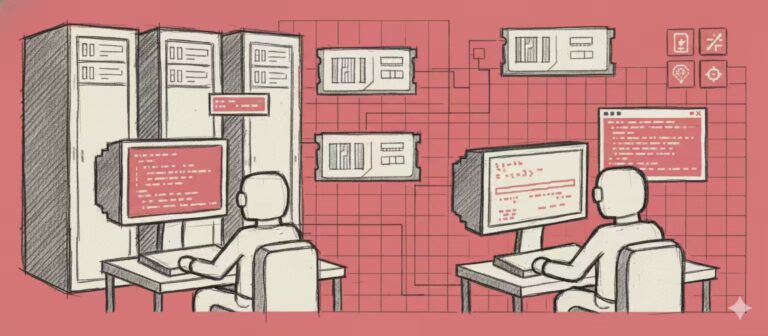
Real-world experiment sharing from HyperAI users

"DeepSeek-OCR 2: Visual Causal Flow" is now available in the "Tutorials" section of the HyperAI website. Simply upload your image to get accurate OCR text parsing. Give it a try!

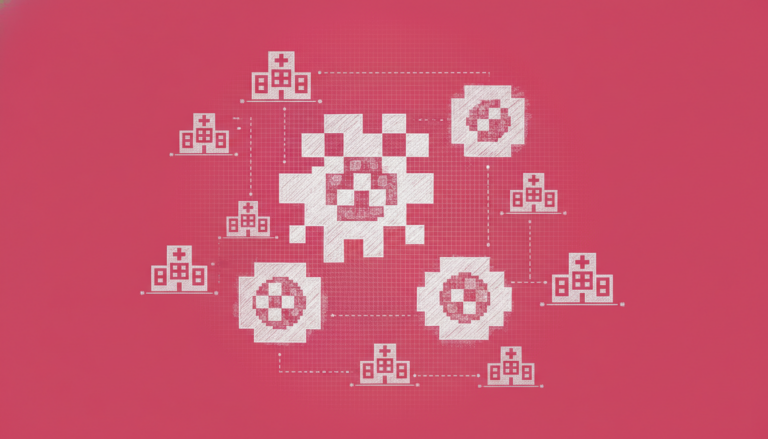
A research team from the Department of Computer Science at University College London (UCL) has proposed a federated learning framework for leukocyte morphology analysis, enabling institutions to collaboratively train without exchanging training data. Utilizing blood smears from multiple clinical sites, the federated model learns robust and domain-invariant feature representations while maintaining complete data privacy. Compared to centralized training, federated training demonstrates superior performance across sites and its ability to generalize to unknown institutions.
A research team comprised of Microsoft Research, the University of Washington, and Providence Genomics has proposed GigaTIME, a multimodal artificial intelligence framework. This framework, based on advanced multimodal learning techniques, can generate virtual mIF maps from conventional H&E slices. The research team applied it to a cohort of over 14,000 cancer patients at Providence Medical Center, covering 24 cancer types and 306 subtypes, ultimately generating nearly 300,000 virtual mIF images, achieving systematic modeling of the tumor immune microenvironment in a large and diverse population.
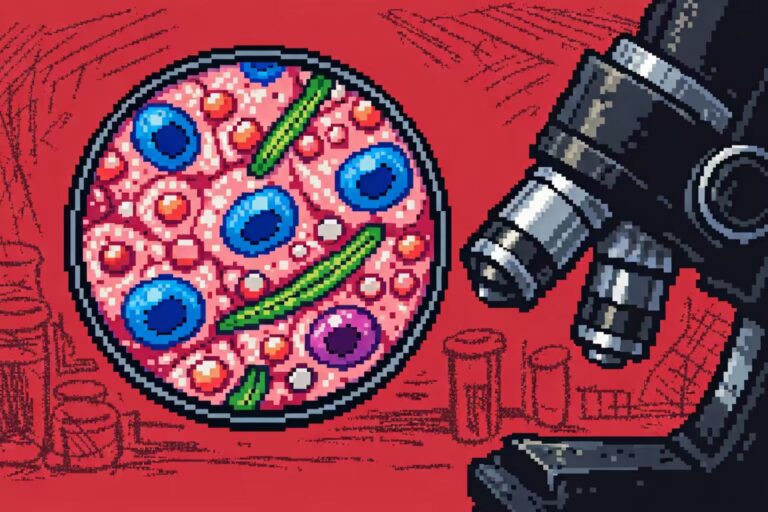
A research team from MIT, the Technical University of Munich, and the Polytechnic University of Valencia has innovatively proposed DiffSyn—a generative diffusion model trained on more than 23,000 generative recipes from literature spanning over 50 years.

The Polymathic AI research team has proposed Walrus, a fundamental model based on the Transformer architecture and primarily geared towards fluid-like continuum dynamics. Walrus covers 19 highly diverse physical scenarios during its pre-training phase, encompassing multiple fields including astrophysics, earth sciences, rheology, plasma physics, acoustics, and classical fluid dynamics. Results show that Walrus outperforms previous foundational models in both short-term and long-term predictions for downstream tasks.

Tencent's WeChat AI team has proposed WeDLM, the first diffusion language model to outperform comparable AR models in inference speed under industrial-grade inference engine (vLLM) optimization. The "WeDLM High-Efficiency Large Language Model Decoding Framework" is now available on the HyperAI website's "Tutorials" section; this article provides a detailed tutorial.
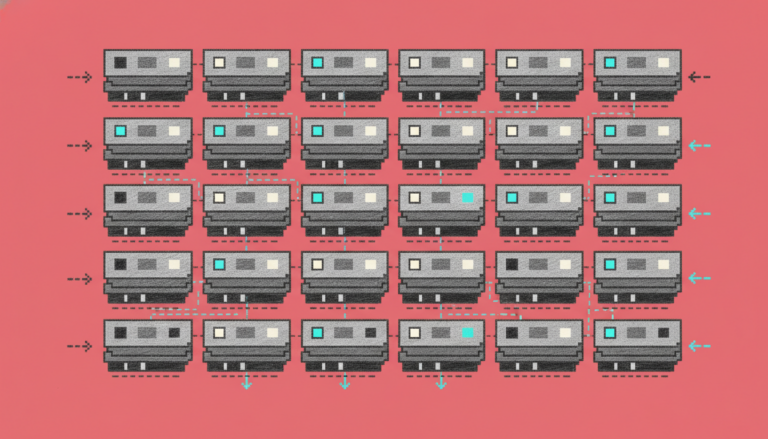
Scientists from Oak Ridge National Laboratory of the U.S. Department of Energy have proposed a distributed cross-channel hierarchical aggregation method (D-CHAG) for basic models. This method distributes the tokenization process and uses a hierarchical strategy for channel aggregation, enabling extremely large-scale models to run on multi-channel datasets.

2.2-2.6 Selected AI Papers
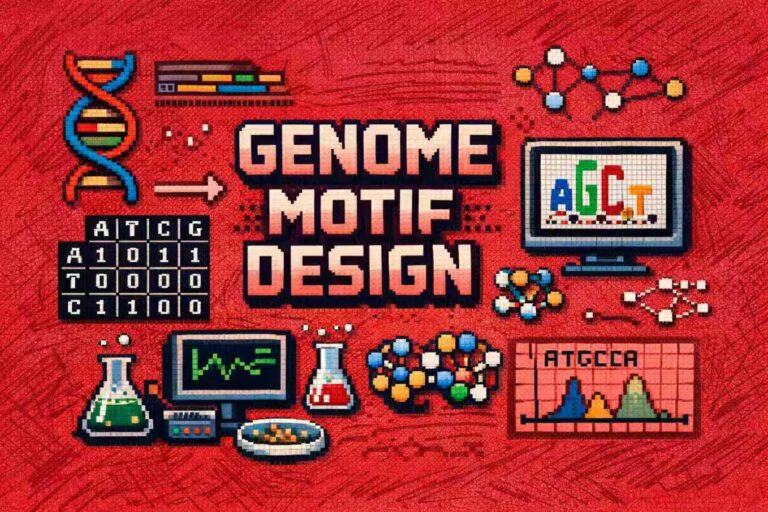
Inspired by the new model of DeepSeek, the Genos team, composed of researchers from BGI Genomics and Zhejiang Zhijiang Laboratory, has launched a dedicated "plug-in" for genome modeling—Gengram (Genomic Engram). With only about 20 million parameters, it has broken the state-of-the-art (SOTA) records for multiple genome tasks, providing a revolutionary solution to overcome the bottleneck of genome modeling.
HyperAl has compiled a series of highly valuable and widely applicable tutorials and datasets from versions 2.2 to 2.6, covering multiple fields such as intelligent agents, computer vision, and TTS.

HyperAl has compiled a series of highly valuable and widely applicable tutorials and datasets from January 26th to 30th, covering multiple fields such as intelligent agents, computer vision, and TTS.

Currently, large-scale, multi-band, wide-field-of-view, and high-depth sky surveys are propelling astronomy into an unprecedented data-intensive era. With the commissioning of next-generation facilities such as the Euclid Space Telescope, the Rubin Observatory, and the Roman Space Telescope, the universe is being systematically mapped on an unprecedented scale and with unprecedented precision. These observations are expected to [...]

Selected AI Papers (January 26-30)
Robotics startup Skild AI has raised $1.4 billion in Series C funding, valuing the company at over $14 billion. The round was led by Japan's SoftBank Group, with participation from strategic investors including Nvidia's NVentures, Macquarie Capital, and Bezos Expeditions (founded by Amazon founder Jeff Bezos). Samsung, LG, Schneider Electric, and Salesforce Ventures also participated.

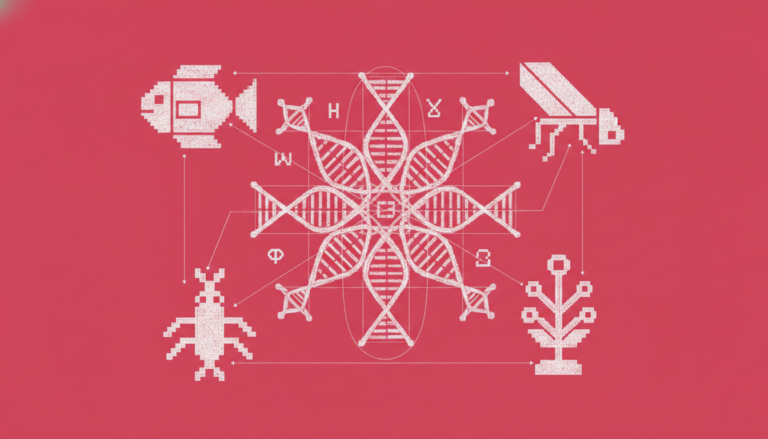
A joint research team comprised of Basecamp Research, NVIDIA, and several top academic institutions has jointly constructed the EDEN series of metagenomic basic models. By learning from massive amounts of natural evolutionary data that cross species and are related to environmental information, they have for the first time systematically extracted the deep "grammar" and universal principles of biological design.
The "TRELLIS.2 3D Generation Demo" is now available on the HyperAI website (hyper.ai) in the "Tutorials" section. Come and experience the efficient 3D model generation!
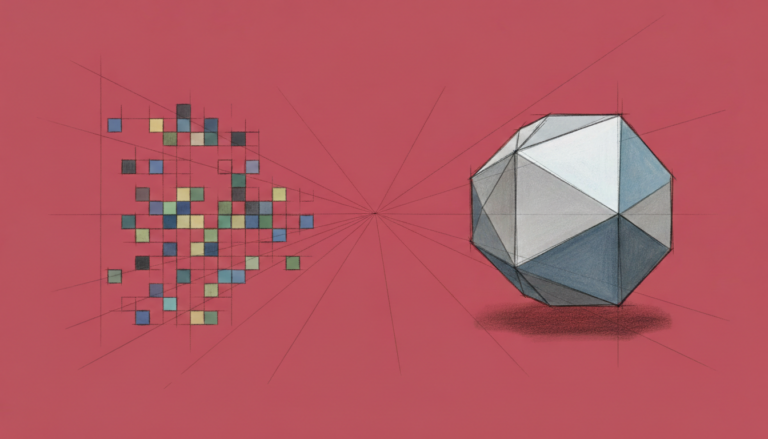
A research team at the University of California designed a special photon trapping texture (PTST) structure on the surface of a standard silicon photodiode and introduced a highly noise-resistant fully connected neural network. This network can intelligently calculate and reconstruct the original spectrum directly from the photocurrent signal measured by the device. This method not only enables the spectrometer to achieve a higher signal-to-noise ratio at longer wavelengths, but its overall performance also surpasses that of traditional silicon-based spectrometers.

HyperAl has compiled a series of highly valuable and widely applicable tutorials and datasets from version 1.12 to 1.16, covering multiple fields such as intelligent agents, computer vision, and TTS.

Selected AI Papers (January 19-23)

This article systematically compiles a batch of high-quality datasets, online tutorials, and papers related to embodied intelligence, providing a reference for further learning and research. Welcome to visit hyper.ai to explore more high-quality resources!

A research team from Goethe University in Germany has classified the "human E3 ligase genome" using metric learning, integrating multi-level data including protein sequences, domain composition, three-dimensional structure, function, and expression patterns. This method expands the traditional classification of E3 enzymes (RING, HECT, and RBR classes) to include atypical mechanisms, successfully elucidates functional partitions, distinguishes between multi-subunit complexes and monomeric enzymes, and maps E3 enzymes to substrates and potential drug targets.
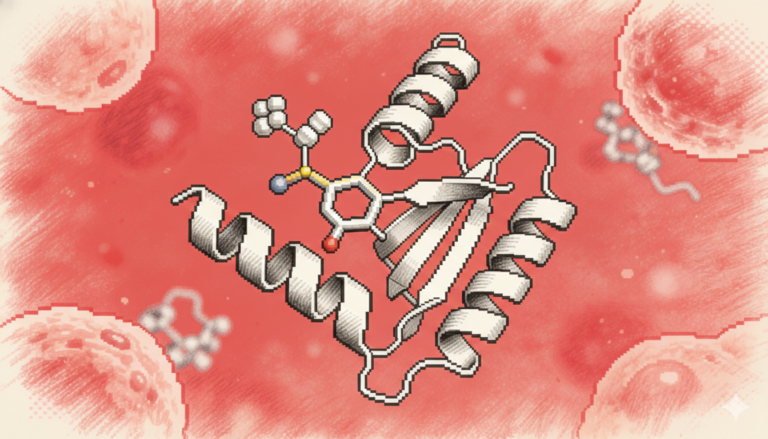
A research team at Yale University recently proposed the MOSAIC model, which transforms a generalized big language model into a collaborative system composed of numerous specialized chemistry experts. Through professional division of labor, it effectively suppresses model illusion, provides quantifiable uncertainty assessment, and realizes the systematic generation from reaction description to complete experimental scheme. It is expected to substantially improve scientific research efficiency in fields such as drug discovery and materials development.

The "GLM-Image Precise Semantic High-Fidelity Image Generation Model" is now available on the HyperAI website (hyper.ai) tutorial section. Come and unleash your boundless creativity!

A research team from Tsinghua University and the University of Chicago systematically assessed the real impact of AI tools on scientific research using a massive dataset of 41.3 million natural science papers and 5.37 million scientists from 1980 to 2025. The study found that while AI significantly enhances individual research output and academic influence, it leads to a contraction of knowledge space and a concentration of academic interaction at the collective level. By identifying AI research through language models and introducing innovation indicators such as "knowledge breadth," the paper reveals the overlooked structural costs behind AI for Science, providing crucial evidence for understanding how AI is reshaping the research ecosystem.

HyperAl has compiled a series of highly valuable and widely applicable tutorials and datasets from version 1.12 to 1.16, covering multiple fields such as intelligent agents, computer vision, and TTS.
"Qwen-Image-2512: Generating More Realistic Portraits and Natural Landscapes" is now available on the HyperAI website (hyper.ai) tutorial section. Come and unleash your boundless creativity!

A joint research team from Princeton University and the Colorado School of Mines has proposed an efficient prediction method based on machine learning. This method uses a large language model to directly predict the free energy from the structural sequence of MOFs, thereby significantly reducing computational costs and enabling high-throughput, scalable thermodynamic assessment of MOFs.
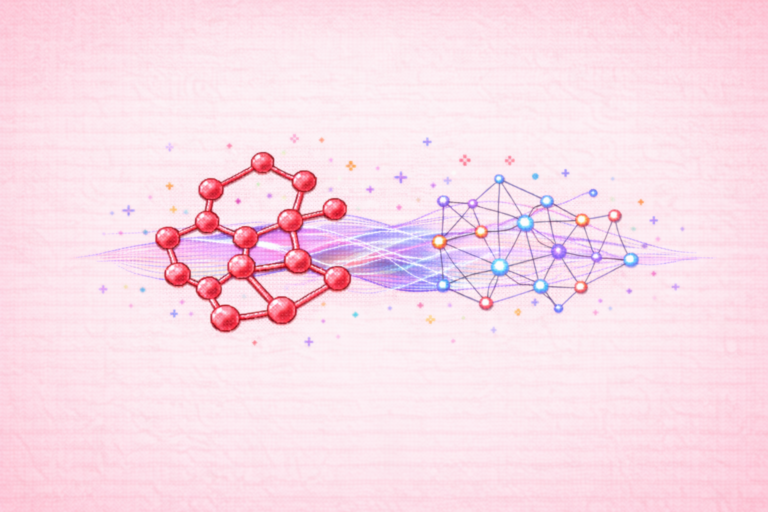
WorldArena, proposed by institutions such as Tsinghua University, Peking University, University of Hong Kong, Princeton University, Chinese Academy of Sciences, Shanghai Jiao Tong University, University of Science and Technology of China, and National University of Singapore, is the first to integrate video generation quality with embodied task functionality, constructing a complete evaluation framework from "looks real" to "is truly usable".
We are still recruiting for closed beta testing, with a maximum reward of ¥200.
Real-world experiment sharing from HyperAI users
"DeepSeek-OCR 2: Visual Causal Flow" is now available in the "Tutorials" section of the HyperAI website. Simply upload your image to get accurate OCR text parsing. Give it a try!
A research team from the Department of Computer Science at University College London (UCL) has proposed a federated learning framework for leukocyte morphology analysis, enabling institutions to collaboratively train without exchanging training data. Utilizing blood smears from multiple clinical sites, the federated model learns robust and domain-invariant feature representations while maintaining complete data privacy. Compared to centralized training, federated training demonstrates superior performance across sites and its ability to generalize to unknown institutions.
A research team comprised of Microsoft Research, the University of Washington, and Providence Genomics has proposed GigaTIME, a multimodal artificial intelligence framework. This framework, based on advanced multimodal learning techniques, can generate virtual mIF maps from conventional H&E slices. The research team applied it to a cohort of over 14,000 cancer patients at Providence Medical Center, covering 24 cancer types and 306 subtypes, ultimately generating nearly 300,000 virtual mIF images, achieving systematic modeling of the tumor immune microenvironment in a large and diverse population.
A research team from MIT, the Technical University of Munich, and the Polytechnic University of Valencia has innovatively proposed DiffSyn—a generative diffusion model trained on more than 23,000 generative recipes from literature spanning over 50 years.
The Polymathic AI research team has proposed Walrus, a fundamental model based on the Transformer architecture and primarily geared towards fluid-like continuum dynamics. Walrus covers 19 highly diverse physical scenarios during its pre-training phase, encompassing multiple fields including astrophysics, earth sciences, rheology, plasma physics, acoustics, and classical fluid dynamics. Results show that Walrus outperforms previous foundational models in both short-term and long-term predictions for downstream tasks.
Tencent's WeChat AI team has proposed WeDLM, the first diffusion language model to outperform comparable AR models in inference speed under industrial-grade inference engine (vLLM) optimization. The "WeDLM High-Efficiency Large Language Model Decoding Framework" is now available on the HyperAI website's "Tutorials" section; this article provides a detailed tutorial.
Scientists from Oak Ridge National Laboratory of the U.S. Department of Energy have proposed a distributed cross-channel hierarchical aggregation method (D-CHAG) for basic models. This method distributes the tokenization process and uses a hierarchical strategy for channel aggregation, enabling extremely large-scale models to run on multi-channel datasets.
2.2-2.6 Selected AI Papers
Inspired by the new model of DeepSeek, the Genos team, composed of researchers from BGI Genomics and Zhejiang Zhijiang Laboratory, has launched a dedicated "plug-in" for genome modeling—Gengram (Genomic Engram). With only about 20 million parameters, it has broken the state-of-the-art (SOTA) records for multiple genome tasks, providing a revolutionary solution to overcome the bottleneck of genome modeling.
HyperAl has compiled a series of highly valuable and widely applicable tutorials and datasets from versions 2.2 to 2.6, covering multiple fields such as intelligent agents, computer vision, and TTS.
HyperAl has compiled a series of highly valuable and widely applicable tutorials and datasets from January 26th to 30th, covering multiple fields such as intelligent agents, computer vision, and TTS.
Currently, large-scale, multi-band, wide-field-of-view, and high-depth sky surveys are propelling astronomy into an unprecedented data-intensive era. With the commissioning of next-generation facilities such as the Euclid Space Telescope, the Rubin Observatory, and the Roman Space Telescope, the universe is being systematically mapped on an unprecedented scale and with unprecedented precision. These observations are expected to [...]
Selected AI Papers (January 26-30)
Robotics startup Skild AI has raised $1.4 billion in Series C funding, valuing the company at over $14 billion. The round was led by Japan's SoftBank Group, with participation from strategic investors including Nvidia's NVentures, Macquarie Capital, and Bezos Expeditions (founded by Amazon founder Jeff Bezos). Samsung, LG, Schneider Electric, and Salesforce Ventures also participated.
A joint research team comprised of Basecamp Research, NVIDIA, and several top academic institutions has jointly constructed the EDEN series of metagenomic basic models. By learning from massive amounts of natural evolutionary data that cross species and are related to environmental information, they have for the first time systematically extracted the deep "grammar" and universal principles of biological design.
The "TRELLIS.2 3D Generation Demo" is now available on the HyperAI website (hyper.ai) in the "Tutorials" section. Come and experience the efficient 3D model generation!
A research team at the University of California designed a special photon trapping texture (PTST) structure on the surface of a standard silicon photodiode and introduced a highly noise-resistant fully connected neural network. This network can intelligently calculate and reconstruct the original spectrum directly from the photocurrent signal measured by the device. This method not only enables the spectrometer to achieve a higher signal-to-noise ratio at longer wavelengths, but its overall performance also surpasses that of traditional silicon-based spectrometers.
HyperAl has compiled a series of highly valuable and widely applicable tutorials and datasets from version 1.12 to 1.16, covering multiple fields such as intelligent agents, computer vision, and TTS.
Selected AI Papers (January 19-23)
This article systematically compiles a batch of high-quality datasets, online tutorials, and papers related to embodied intelligence, providing a reference for further learning and research. Welcome to visit hyper.ai to explore more high-quality resources!
A research team from Goethe University in Germany has classified the "human E3 ligase genome" using metric learning, integrating multi-level data including protein sequences, domain composition, three-dimensional structure, function, and expression patterns. This method expands the traditional classification of E3 enzymes (RING, HECT, and RBR classes) to include atypical mechanisms, successfully elucidates functional partitions, distinguishes between multi-subunit complexes and monomeric enzymes, and maps E3 enzymes to substrates and potential drug targets.
A research team at Yale University recently proposed the MOSAIC model, which transforms a generalized big language model into a collaborative system composed of numerous specialized chemistry experts. Through professional division of labor, it effectively suppresses model illusion, provides quantifiable uncertainty assessment, and realizes the systematic generation from reaction description to complete experimental scheme. It is expected to substantially improve scientific research efficiency in fields such as drug discovery and materials development.
The "GLM-Image Precise Semantic High-Fidelity Image Generation Model" is now available on the HyperAI website (hyper.ai) tutorial section. Come and unleash your boundless creativity!
A research team from Tsinghua University and the University of Chicago systematically assessed the real impact of AI tools on scientific research using a massive dataset of 41.3 million natural science papers and 5.37 million scientists from 1980 to 2025. The study found that while AI significantly enhances individual research output and academic influence, it leads to a contraction of knowledge space and a concentration of academic interaction at the collective level. By identifying AI research through language models and introducing innovation indicators such as "knowledge breadth," the paper reveals the overlooked structural costs behind AI for Science, providing crucial evidence for understanding how AI is reshaping the research ecosystem.
HyperAl has compiled a series of highly valuable and widely applicable tutorials and datasets from version 1.12 to 1.16, covering multiple fields such as intelligent agents, computer vision, and TTS.
"Qwen-Image-2512: Generating More Realistic Portraits and Natural Landscapes" is now available on the HyperAI website (hyper.ai) tutorial section. Come and unleash your boundless creativity!
A joint research team from Princeton University and the Colorado School of Mines has proposed an efficient prediction method based on machine learning. This method uses a large language model to directly predict the free energy from the structural sequence of MOFs, thereby significantly reducing computational costs and enabling high-throughput, scalable thermodynamic assessment of MOFs.